Session Overview:
In this session, students dive into the concept of pushing as they explore the strength and effects of different pushes. Using a “push meter” (load cell sensor), they’ll see how gentle and strong pushes create different numbers on the screen. By experimenting with various objects, students intuitively learn that pushing affects movement and can be measured, building a foundation for understanding force. Through playful activities and real-life connections, students discover how pushing harder or softer changes how things respond.
Equipment Required:
- MeasureLab with load cell sensor.
- Objects for pushing (e.g., toy cars, blocks, soft balls, small boxes).
- Laptop or PC for displaying measurements.
- Worksheets with images and playful activities to reinforce the concept of force through pushing.
- Colouring materials (crayons, coloured pencils, markers).
Learning Objectives:
In this session, students will:
- Experiment with pushing objects of different sizes and weights.
- Explore how pushing harder or softer affects what happens on the screen without focusing on measurements.
- Get an intuitive sense of how pushing makes things move, observing the number on the screen plot change without needing to understand exact numbers.
- Discover the concept of force through fun activities that allow them to see how hard or soft pushes change the measurement.
Teacher Resource:
Session File: ML18.plf (57.9 KB)
Teaching Aids:
- Projector (optional).
Preparation:
This step has to be done before the session on each workstation/apparatus by the teacher/session instructor:
- Make sure that each computer has Physlogger installed and can detect the Measrelab when connected to it using the provided cable.
- Each Measurelab should have access to a power outlet for sensors that require external power.
- Your setup will look like this:
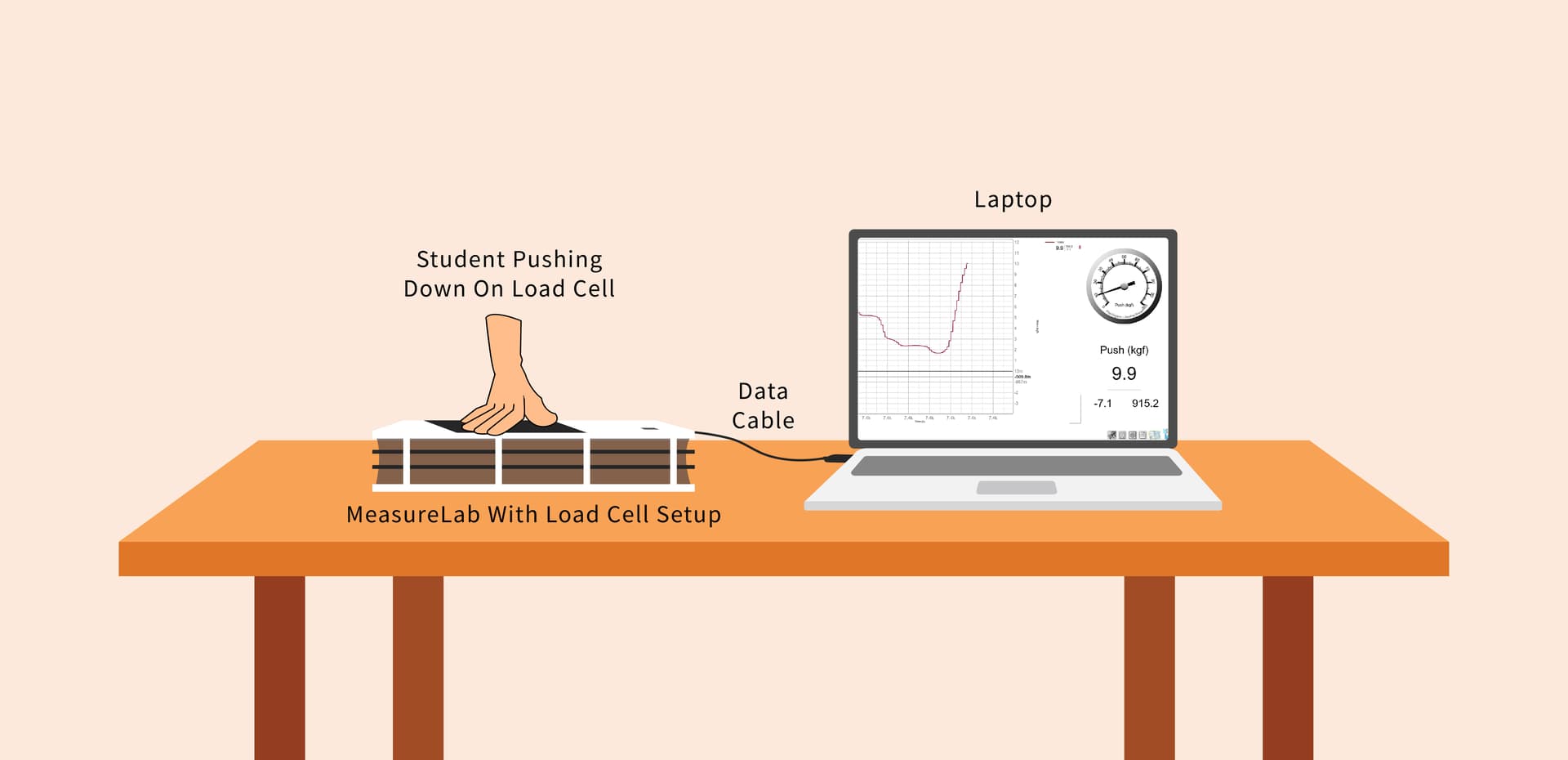
Note: Make sure students don’t put too much force on the load cell since it is very sensitive and has a maximum rating of 1kg mass.
Introduction: (10 minutes)
Instead of starting with questions, let students begin by simply pushing! As they gather, hand each student a soft ball or a block and ask them to push it gently across the table. No explanation yet—just get them physically involved.
After a minute or two, gather them together and ask:
“What did you notice? Was it easy to move? What happens when you push harder?”
You can continue by building on their observations:
“When you pushed the ball softly, it moved a little, didn’t it? And when you pushed harder, it went much farther! Now, we’re going to see something very cool. We’re going to use a special tool to see what happens when you push something—how strong your push is.”
Let them know the activity is all about pushing and watching what happens. Instead of talking about the tool (load cell) right away, frame it as a “push meter” that shows them how strong their pushes are.
Hands-On Exploration (15-20 minutes):
Introducing the Push Meter (Load Cell Sensor):
- Bring out the MeasureLab and refer to the load cell as the “push meter.” Tell the students:
“This ‘push meter’ will show us how strong we push. Who wants to go first?”
- Invite a volunteer to press gently on the load cell. Show them the screen and the number on the screen. Say:
“Wow! Look at the number go up! That means you pushed it. What do you think will happen if we push harder?”
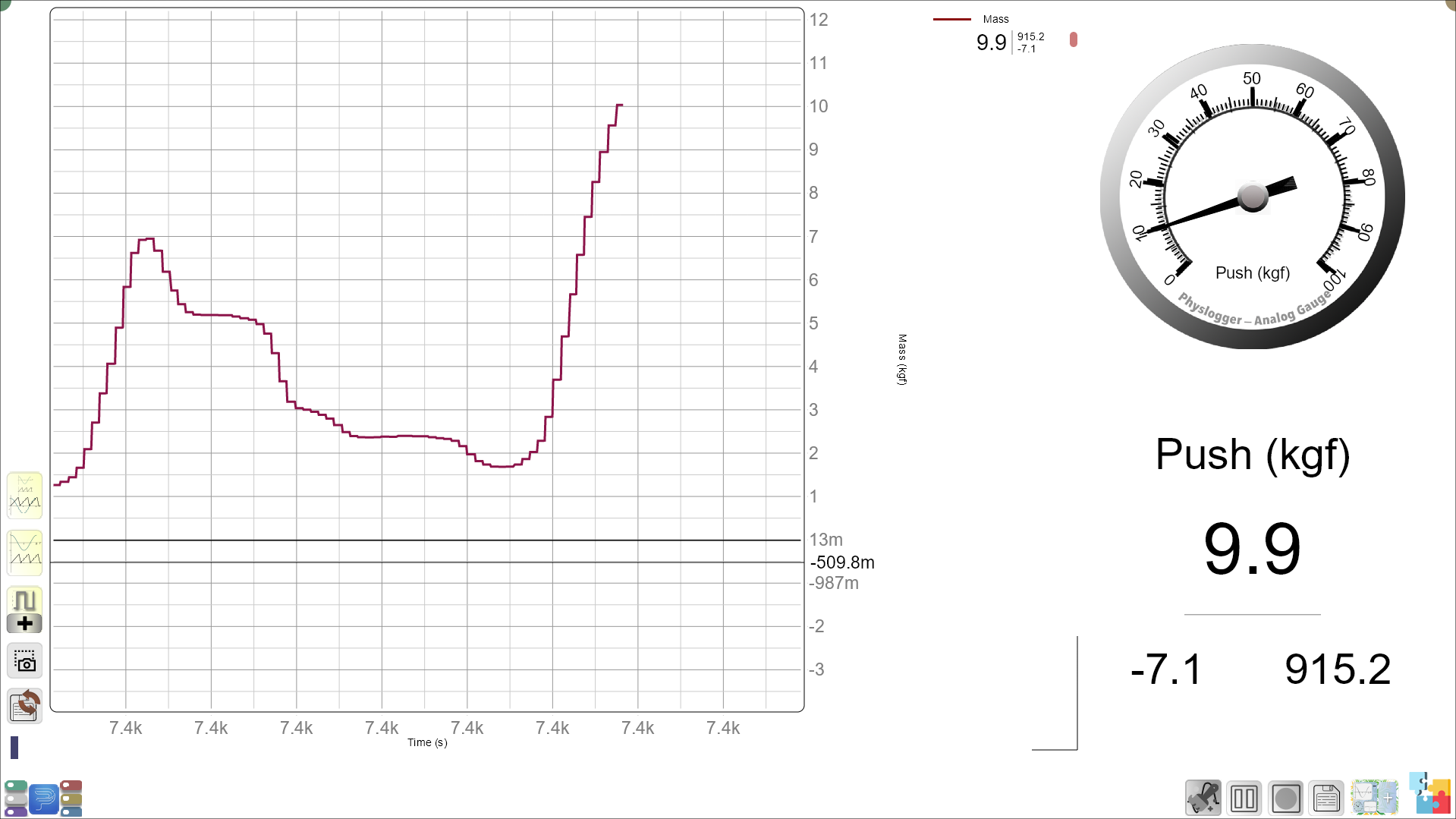
- Let the students experiment. They can use their hands, soft balls, or even toy cars to push against the load cell. Focus on intuitive learning, such as:
- “Did you see how the number becomes larger when you push harder?”
- “What happens when you push slower?”
Exploring Different Types of Pushes:
- Hand out different objects (soft balls, blocks, toy cars) and let the students experiment with pushing each one against the push meter. Ask them to make observations about how the number on the screen on the screen changes.
- As they push the objects, say things like:
“That car zoomed across when you pushed it! What about the ball—did you have to push harder or softer?”
“What happens when you push with both hands instead of one?”
Guided Activity (15 minutes):
Worksheet Activity:
1. Push Strength Colouring Activity:
- Give them a worksheet with pictures of the objects they pushed (e.g., car, ball, block). Have them colour the objects based on how hard they had to push:
- Colour the object red if they had to push hard.
- Colour the object blue if it was easy to push.
2. Push Experiment Story:
- Create a story about a playful character (e.g., a girl named Sara) who pushes different objects—doors, toys, a big rock. Leave spaces for the students to draw or colour what happened after each push.
- “Sara pushed the door. It moved slowly. What do you think she saw on the push meter? Colour the picture!”
- “Then, Sara pushed the rock. It didn’t move at all! What do you think happened to the number on the push meter?”
The goal is to connect the fun of pushing objects with the visual feedback of the measurement, while keeping the activity playful and intuitive.
Real-World Connections:
Now that they’ve had a chance to explore pushing and observing, take a moment to ask real-world connection questions:
- “When you open a heavy door, do you have to push harder or softer?”
- “What about when you push a toy car? Is it easier than pushing a door?”
You can build on their responses by connecting their pushes with actions they do every day:
- “When you push harder, just like on the push meter, the door opens wider. And when you push gently, the car moves slower.”
This keeps the connection to real life simple and memorable.
Summary and Reflection (5-10 minutes):
Instead of summarizing with the usual format, turn the reflection into a conversation. Sit with the students in a circle and ask them to share:
- “What was the most fun thing to push today?”
- “Who noticed something surprising? Did any push make the number become larger than you thought?”
You can end the session by saying:
- “Today, we learned that every time we push something, the push meter shows us what happens. Sometimes the number is large and sometimes the number. It’s all about how we push!”
Encourage them to think about how they push things in everyday life and let them share stories about pushing different objects at home or outside.
Glossary:
- Force: How hard or soft you push something to make it move.
- Push Meter: A tool that shows us how strong our pushes are.