Grade 3 - Session 9: “Why Do Things Feel Heavier?”
Session Architect: Muhammad Bilal - Markhor3D
Session Length: 50-60 minutes
Session Overview:
In this session, students will explore why different materials feel heavier or lighter, even when they take up the same amount of space. Using beakers, various substances, and a load cell, students will discover how different materials weigh differently based on how “tightly packed” they are, without complex terminology. This hands-on session encourages observation, comparison, and simple, interactive science.
Learning Objectives:
In this session, students will:
- Use MeasureLab equipment to observe weight differences among identical volumes of various substances.
- Make predictions by assigning a weight ranking to materials, then compare actual measurements to their predictions.
- Discover that different materials feel heavier or lighter for the same amount of space due to how closely packed they are.
- Relate this concept to real-world objects and experiences.
Equipment Required:
- MeasureLab setup with load cell sensor
- Transparent beakers or containers of equal size
- Substances for filling the beakers: water, sand, gravel, oil, and cotton
- Worksheet for recording predictions and observations
Teacher Resource:
Session File: ML39.plf (57.8 KB)
Preparation:
This step has to be done before the session on each workstation/apparatus by the teacher/session instructor:
- Make sure that each computer has Physlogger installed and can detect the Measrelab when connected to it using the provided cable.
- Each Measurelab should have access to a power outlet for sensors that require external power. For this session, we will use the loadcell which does not need external power.
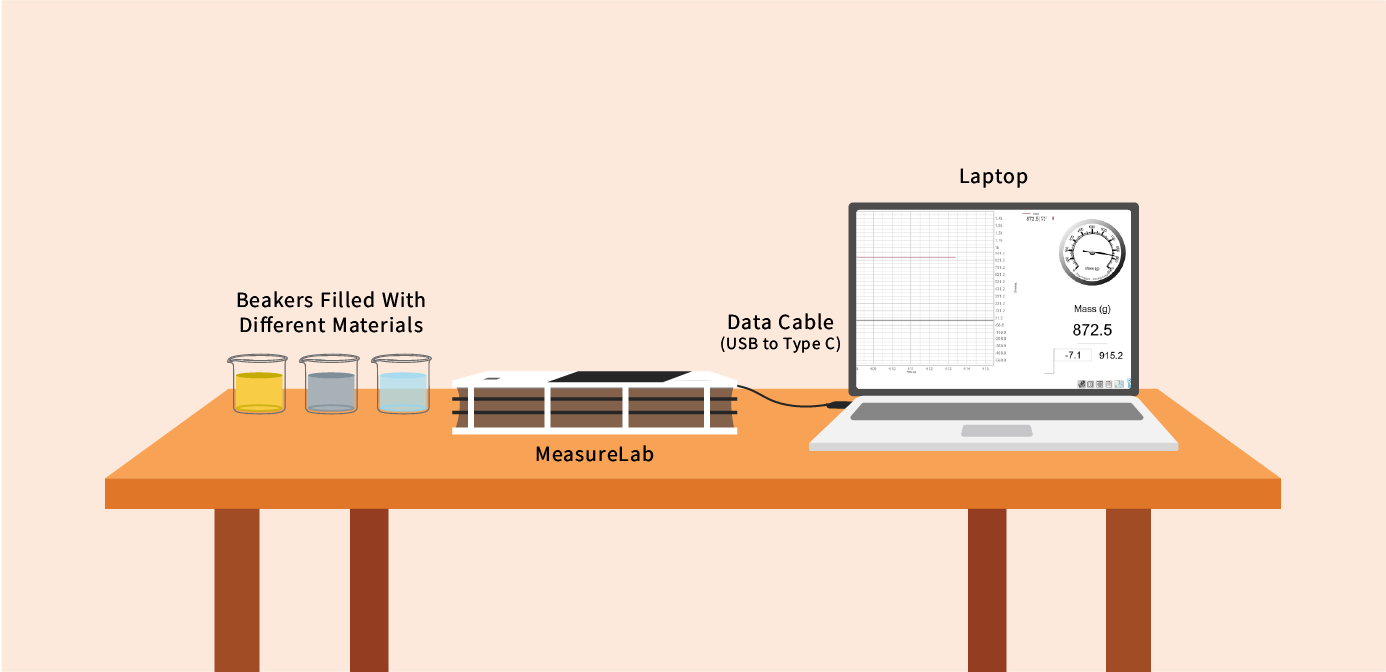
- Connect the Measurelab to your computer and open the provided session file.
- Your setup will look like this:
Introduction: (10 minutes)
Engaging Students with a Mystery Box Activity
Start by showing the class two identical-looking boxes. Explain that each box is filled to the same level, but with different things.
Ask:
“Which box do you think will be heavier?”
- Let them share guesses, then lift each box and reveal that one feels noticeably heavier than the other.
Reveal the Contents:
Show that one box is filled with heavy marbles and the other with light cotton balls.
Discussion Prompt:
“What made one box feel heavier even though they were filled to the same level?”
- Let students discuss and share ideas. Some might notice the different materials inside, opening up the idea of why some things feel heavier than others.
Building Curiosity for the Experiment:
Tell students they’ll be investigating this concept using different materials to see which ones feel heavier or lighter, even when they have the same amount.
2. Setting Up and Making Predictions (10 minutes)
Introducing the Ranking Activity:
-
Hand out the beakers and explain that each beaker will be filled to the same level with different materials.
-
Assigning a Prediction Ranking:
Ask students to pick up each filled beaker, one at a time, and assign a ranking from 1 to 5 based on which one they think will be the lightest to heaviest. They’ll write these predictions in their worksheet. -
Worksheet Activity Example:
Material Prediction Ranking (1 = Lightest, 5 = Heaviest) Actual Weight (grams) Actual Ranking Water Sand Gravel Oil Cotton
Teacher Prompt:
Encourage students to share their rankings with a partner to compare guesses before measuring the actual weights.
3. Conducting the Experiment (15 minutes)
Steps for the Experiment:
-
Each group will fill their beakers with the same level of each material.
-
Place each filled beaker on the MeasureLab load cell and record the weight.
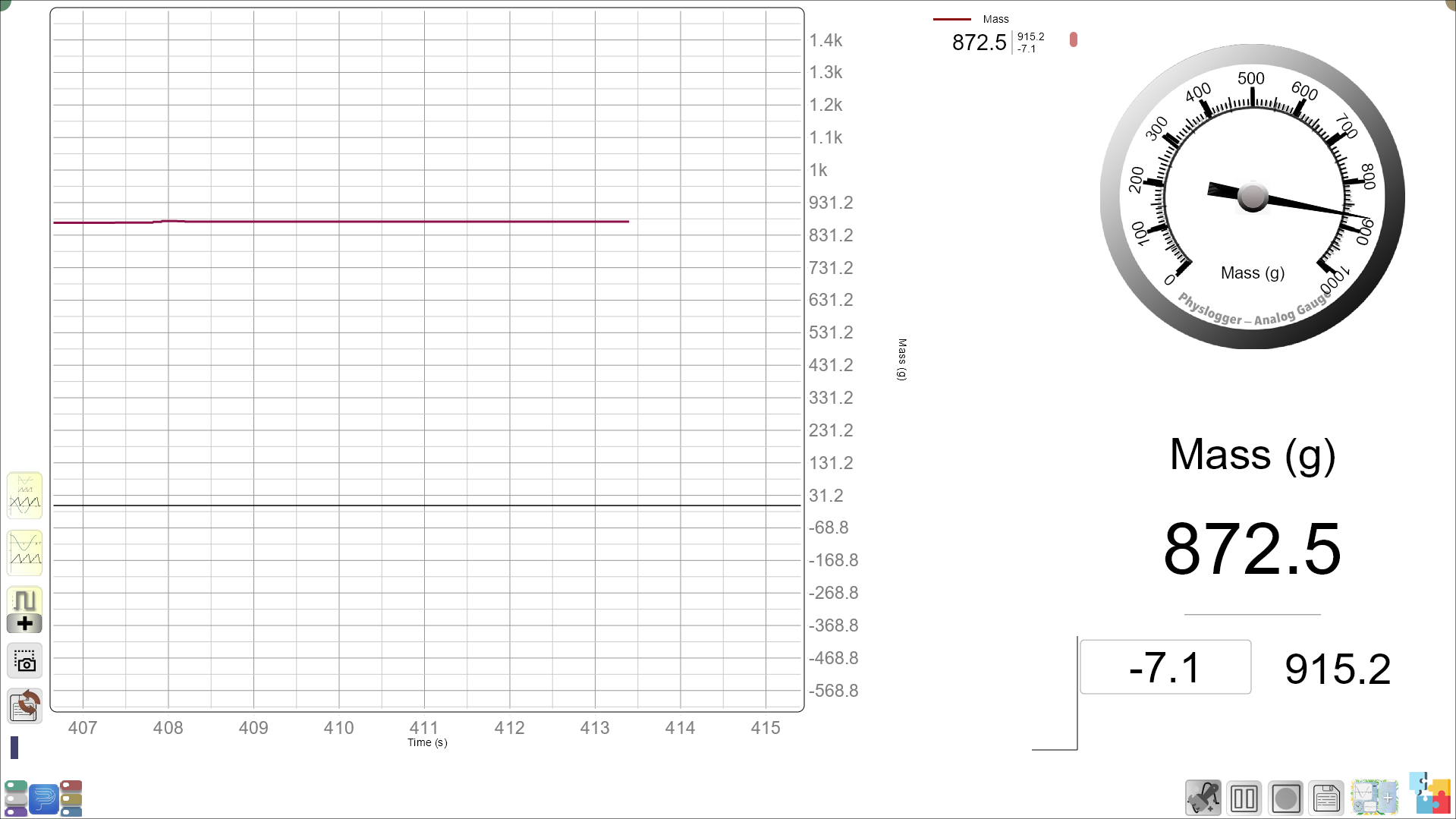
- After weighing each beaker, students will write down the actual weight and actual ranking in their worksheet to compare with their prediction.
4. Discussion and Explanation of Observations (15 minutes)
Guided Discussion:
After completing the experiment, bring the students together for a discussion to compare results.
-
Starting with Observations
- Ask:
“Which material ended up being the heaviest? Did anything surprise you about the actual rankings compared to your predictions?”
- Ask:
-
Explaining the Concept of “Packing” with the Rubber Band Activity
-
Take a rubber band and wrap it around three pens to hold them together. Then, add more pens to show how the same rubber band can hold more items by stretching.
-
Ask:
“Did the rubber band change? What allowed it to hold more pens?”
-
Explain:
Just like the rubber band can fit more items by stretching, each material has a different way of “fitting” everything inside. Some things are packed more tightly than others.
-
-
Comparing Materials – Spaces Inside Different Substances
-
Ask:
“Imagine filling a box with marbles and then filling the same box with sand. Which one do you think would feel heavier, and why?”
-
Explain that sand fills up almost all the tiny spaces in the container, while larger marbles leave gaps, making sand feel heavier in the same amount of space.
-
Encourage them to gather some sand and it’s small grains while on the other hand when they do the same thing with marbles, there will be spaces between them.
-
Explain to them how this space is what limits us from packing more marbles in a single box.
-
5. Real-World Examples and Summary (5 minutes)
Applying the Concept in Real Life:
Ask students to think about other examples around them, like a bag of sugar versus a bag of popcorn. Which do they think would feel heavier if both bags were the same size?
Cool Fact:
"Did you know that this idea is why large ships made of metal can still float? Even though metal is heavy, ships have a lot of empty spaces inside, so they’re not packed tightly and can float on water!”
Reflecting on the Experiment:
Summarize by explaining that they’ve discovered that materials can feel heavier or lighter based on how closely packed everything is, even if they’re the same size.
Closing Question:
“Now that we know different materials can feel heavier or lighter based on how they’re packed, can you think of anything else at home that might feel different when packed tightly or loosely?”