Grade 6 – Session 7: “Human Heart—Measuring Pulse Rate”
Session Architect: Aleeza Ayaz - Markhor3D
Session Length: 50-60 minutes
Session Overview:
In this session, students will use MeasureLab and an IR pulse sensor to measure their pulse rates at rest and after exercise, observing how physical activity affects the heart. They will analyze the sinusoidal pulse wave on a live plot to understand how the heart’s rhythm and contractions create pressure changes that move blood through the body. Through hands-on activities and discussions, students will explore real-life applications of pulse measurement in healthcare and technology, such as fitness trackers and medical devices, while learning the importance of maintaining a healthy heart.
Learning Objectives:
In this session, students will:
- Measure their pulse rates at rest and after exercise using MeasureLab and an IR pulse sensor.
- Observe and analyze the sinusoidal pattern of the pulse wave on a live plot, understanding how it reflects the heart’s rhythm.
- Explore how the heart’s contractions create pressure changes, impacting blood volume in vessels.
- Discuss real-life applications of pulse measurement in healthcare and technology, and the importance of a healthy heart.
Equipment Required:
- MeasureLab attached to IR pulse sensor for measuring pulse rate.
- A laptop or PC for displaying live plots of pulse rate.
- Worksheet for students to record resting and post-exercise pulse rates.
- Pens, pencils, markers, etc.
Teaching Aids:
- Projector (optional, for displaying live pulse rate plots).
- Visual aids showing basic diagrams of the heart and circulatory system.
- Whiteboard to explain the concepts of pressure, volume, and how the heart moves blood.
Teacher Resource:
Session File: ML67.plf (61.1 KB)
Preparation:
This step has to be done before the session on each workstation/apparatus by the teacher/session instructor:
- Make sure that each computer has Physlogger installed and can detect the Measrelab when connected to it using the provided cable.
- Each Measurelab should have access to a power outlet for sensors that require external power. For this session, Pulse Sensor will be used which requires an external power source.
- Launch the Physlogger application and load the session file provided in the resources section.
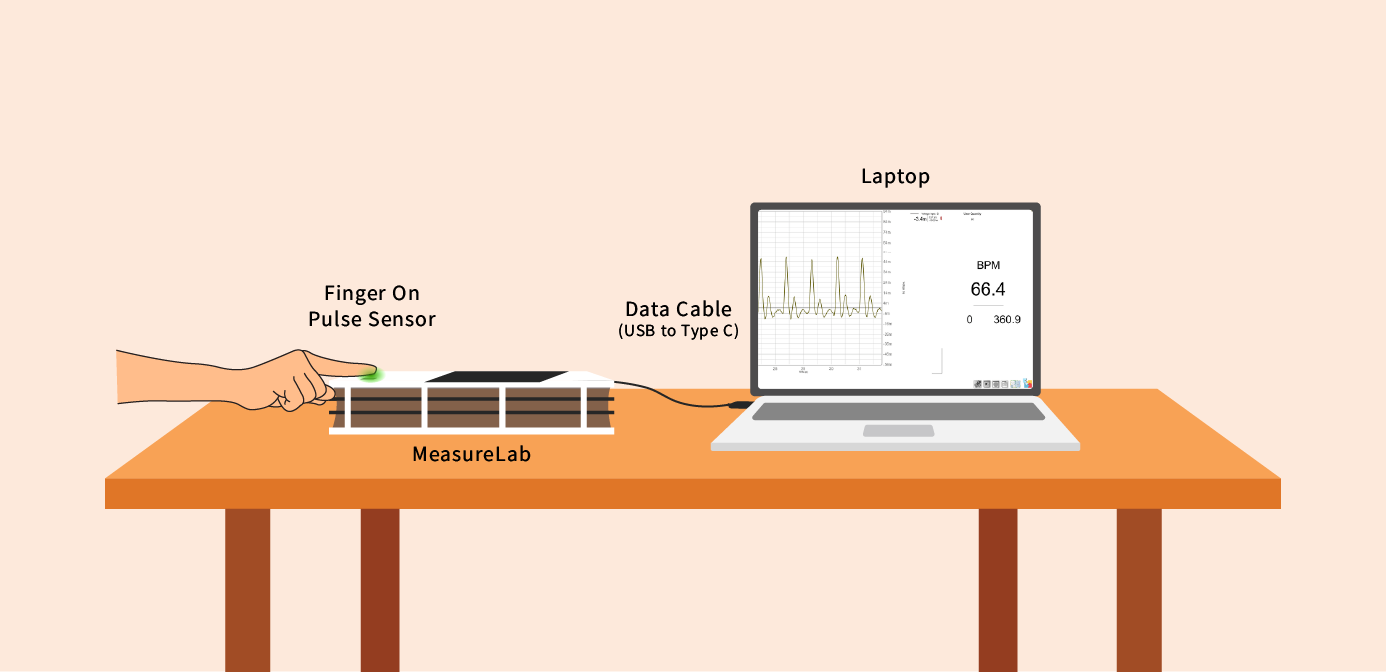
Your setup will look something like this:
Introduction: (10 minutes)
- Engaging Students with Pulse and Heartbeat:
Begin by introducing the basics of pulse rate and how the heart pumps blood.- You may start by asking:
“Have you ever felt your pulse beating in your wrist or neck? What do you think it’s measuring?”
Let students share their ideas.
You may explain:
“Your pulse is actually a wave of pressure that happens each time your heart beats. This pressure wave moves through your veins, which we can feel as our pulse.”
- Relating the Pulse to Heart Function:
You may say:
“Each time your heart contracts, it pushes blood out with a lot of force. This creates a pressure wave in your blood vessels, which we feel as our pulse.”
- Show students a simple diagram of the heart and explain that with each beat, the heart creates a wave of movement that travels through the blood vessels.
Hands-On Exploration: (35-40 minutes)
This is a guided activity, where the teacher will help students measure and observe the sinusoidal pulse pattern.
Step-by-Step Activity:
- Measuring Resting Pulse Rate:
- First, students will use the IR pulse sensor on MeasureLab to measure their pulse while sitting quietly.
- You may ask:
“What do you think your pulse rate is when you’re just sitting still?”
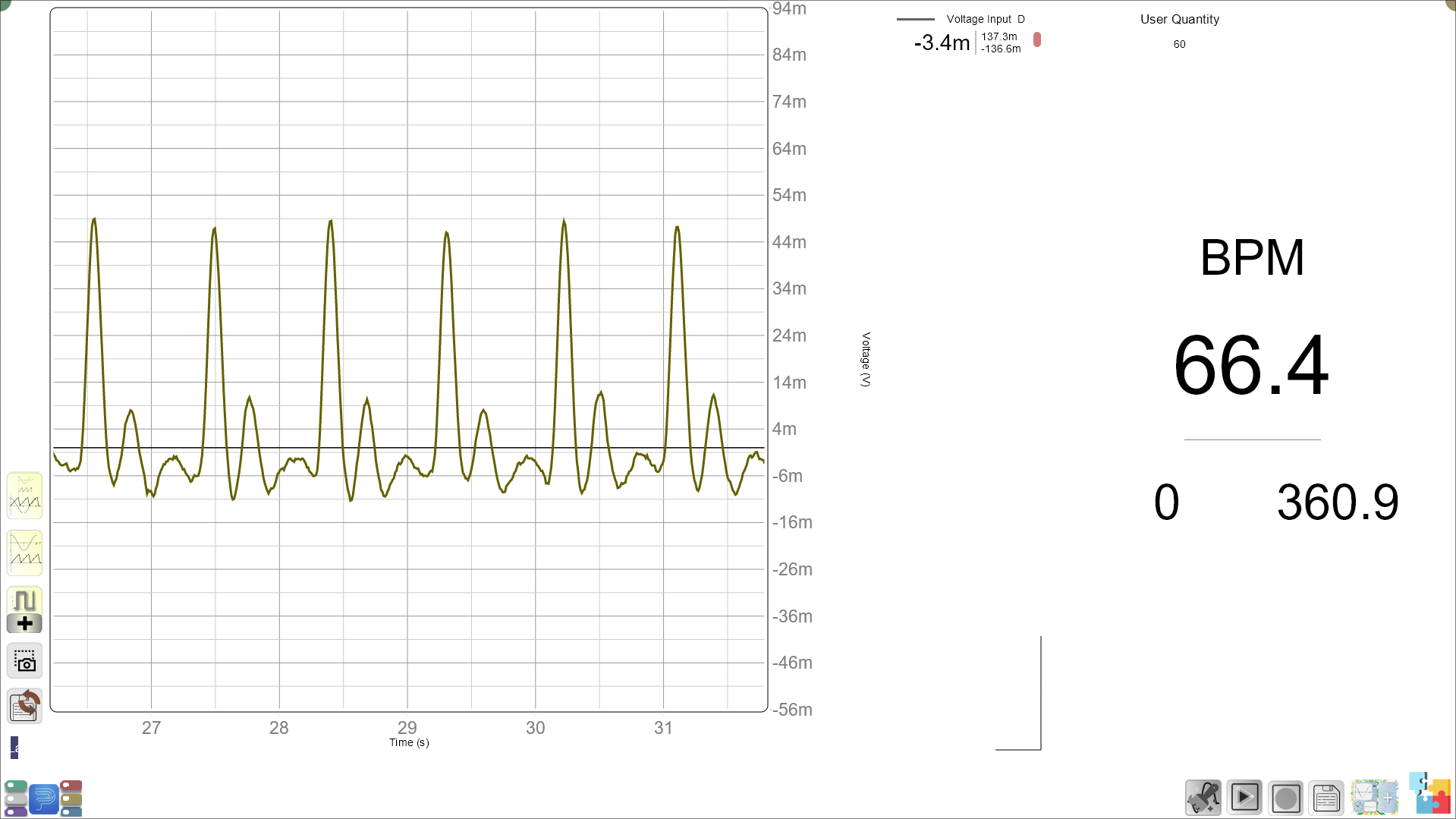
- Students will record their resting pulse rate on their worksheet and observe the live plot.
- Observing the Sinusoidal Pattern in the Pulse Plot:
- As students watch the live plot, you may guide them to observe the shape of the wave:
“Does the line go up and down in a smooth, wave-like pattern? This wave is called a sinusoidal pattern because it has a repeating rhythm, just like your heartbeat.”
- Explaining Why the Pulse is Sinusoidal:
You may say:
“This wave pattern happens because of how the heart beats. When the heart contracts, it creates a peak in pressure, pushing blood through the vessels. Then, as the heart relaxes, the pressure drops. This up-and-down cycle happens with every beat, creating a smooth, repeating wave.”
- Linking to Pressure and Volume Changes After Observing the Pulse:
- After students have seen the wave pattern, you may explain how pressure and volume work together in the blood vessels:
- You may ask:
“What happens to the space inside the heart when it contracts?”
- You may explain:
“When the heart contracts, it squeezes tightly, making the space (volume) inside its chambers smaller. This means there’s less room for the blood.”
- You may ask:
“What do you think happens to the pressure inside the heart when it contracts and squeezes blood into a smaller space?”
Building upon their responses, you can explain:
“As the space gets smaller, the pressure increases. Since the blood is now in a tighter space, it’s pushed out of the heart and into the arteries. This high pressure helps move the blood through the body.”
You may ask:
“Now, what do you think happens when the heart relaxes and opens back up?”
Keep the conversation going and explain:**
“When the heart relaxes, the volume inside increases as the heart fills with blood again. With more space available, the pressure decreases, allowing blood to flow back into the heart from the veins.”
- You may ask:
“Why does pressure increase when volume decreases?”
You may explain:
“This follows a principle called Boyle’s Law: as the space (volume) inside a closed area gets smaller, the pressure goes up. And as the space increases, the pressure goes down. This relationship helps the heart pump blood, pushing it out when it contracts and refilling when it relaxes.”
“Each time the heart contracts and creates pressure, it also changes the volume in your blood vessels. When the pressure increases, blood vessels stretch a little to let more blood through. When the pressure drops, the vessels relax back to their normal size.”
- Question to Reinforce Understanding:
- Ask: “Why do you think we see a wave shape instead of just straight lines? What does the up-and-down movement tell us about the heart’s rhythm?”
- Encourage students to connect the wave shape to the heart’s continuous cycle of contracting and relaxing.
-
Exercise and Measuring Pulse Rate:
-
Have students perform light exercise (like jumping or jogging in place) for one minute, then measure their pulse rate again immediately after.
-
Ask Questions While They Measure:
- “What do you think will happen to your pulse rate after exercising? Why?”
- “How does your heart feel after exercise compared to when you’re resting?”
-
Explaining the Science of Increased Pulse Post-Exercise:
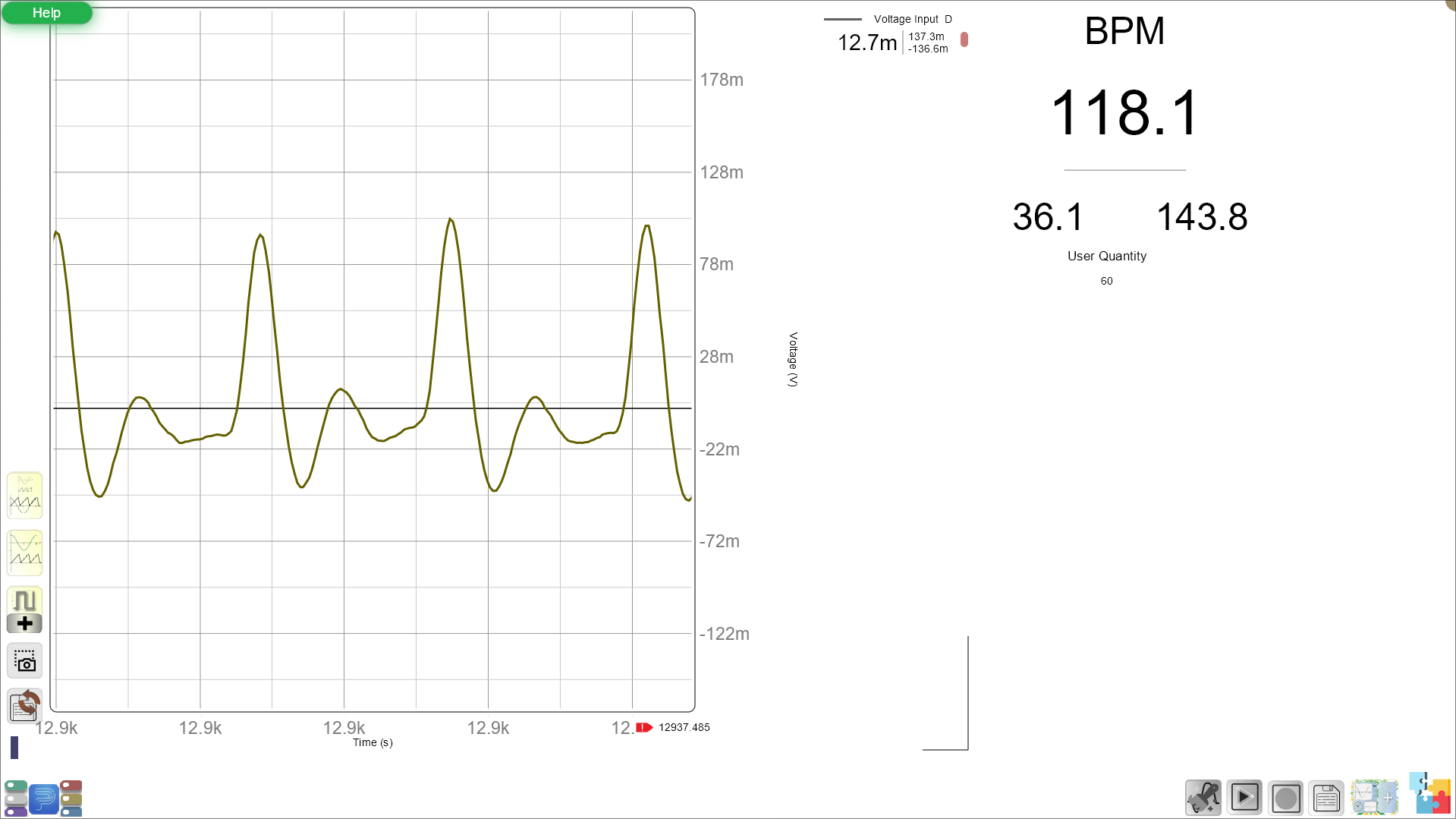
- “When you exercise, your heart needs to pump faster to deliver more oxygen and nutrients to muscles. This makes the pulse wave more frequent on the plot, showing a faster beat.”
-
-
Recording and Observing Changes in Pulse Rate:
- Students will record their pulse rate after exercise on the worksheet.
- You may guide them with questions like:
- “Did your pulse rate increase after exercise? Why do you think it did?”
- “Why would your heart need to beat faster when you’re moving more?”
Worksheet Activity:
-
Recording Data:
- The worksheet will have columns for students to record their resting pulse rate and post-exercise pulse rate.
Condition Pulse Rate (beats per minute) Observations Resting After Exercise -
Reflection Section:
- You may ask students:
- “What differences did you notice in your pulse rate before and after exercise?”
- “Why do you think your pulse went up after exercise?”
- “How does your heart use pressure to help blood move through your body?”
- You may ask students:
-
Real-Life Connections:
- Reinforce real-world uses of pulse monitoring by asking:
- “Can you think of places where it’s important to measure pulse, like a hospital or while exercising?”
- Explain that pulse monitoring is critical in surgeries, for athletes training, and for keeping track of heart health in everyday life. Devices like smartwatches or fitness trackers allow us to see how active our heart is, and doctors use this technology to help keep us healthy.
- Reinforce real-world uses of pulse monitoring by asking:
Summary and Reflection: (10 minutes)
-
Conclusion:
- The teacher may summarize:
“Today, we learned that our pulse is a sign of our heart pumping blood through our body. Each beat creates a wave of pressure that pushes blood through, which we feel as our pulse. This wave creates a repeating pattern, called a sinusoidal wave, that matches the heart’s rhythm.”
- The teacher may summarize:
-
Reflection Questions:
- “Why do you think your pulse rate changes after moving or exercising?”
- “Can you think of other times when your pulse might go up, like when you’re excited or scared?”
- “Why is it important to monitor your pulse in a hospital, during a workout, or in everyday health checks?”
-
Real-Life Example:
- You may explain:
“Good heart activity means that your body is getting all the oxygen and nutrients it needs. Doctors use pulse monitors to make sure a patient’s heart is working well, and athletes use them to measure how hard their heart is working to stay fit. Devices like smartwatches track our pulse to help us take care of our heart and stay healthy!”
- You may explain:
Glossary:
- Pulse Rate: The number of times a pulse is felt in a minute, showing heartbeats.
- Heart Rate: The speed of the heartbeat, often the same as pulse rate.
- Blood Pressure: The force of blood moving through the blood vessels.
- Volume: The amount of space inside blood vessels that fills with blood as the heart pumps.
- Sinusoidal Wave: A smooth, repeating wave pattern seen in the pulse plot, created by the heart’s rhythmic contractions.
- Exercise: Physical activity that increases heart rate and pulse rate to help the body get energy.