Grade 3 Session 4: “Exploring Energy and Transfer”
Architect: Aleeza Ayaz - Markhor3D
Session Length: 50-60 Minutes
Session Overview:
In this session, students will explore the concept of energy and its transfer through fun, hands-on activities. They will discuss how energy helps us do work, experiment with a wind-up car and a paper ball, and use MeasureLab’s load cell to visualize energy transfer. By observing live plots and analyzing their results, students will develop an understanding of how energy is stored, used, and transferred to other objects, fostering curiosity and critical thinking.
Equipment Required:
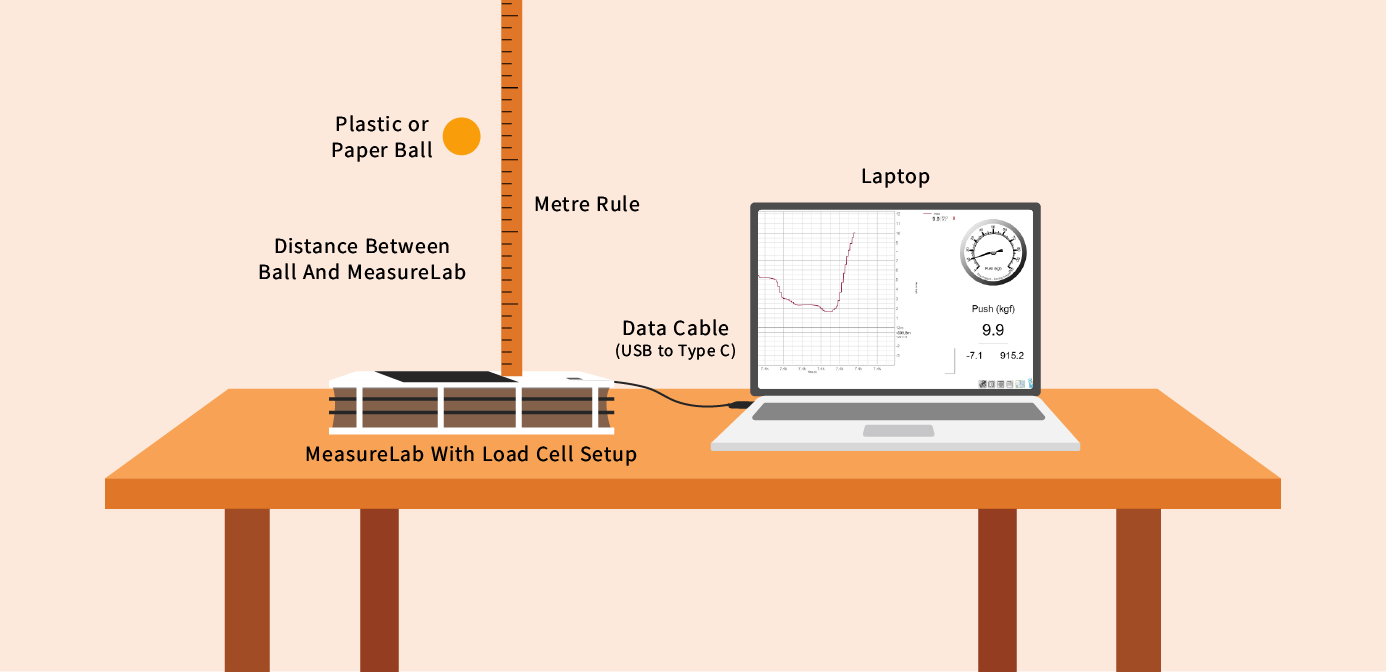
- MeasureLab with load cell connected to a laptop/PC for live plots.
- Wind-up car.
- Lightweight paper ball.
- Ruler or tape measure (for measuring ball drop height).
- Worksheets for recording predictions and observations.
- Pens, pencils, and markers.
Learning Objectives:
By the end of this session, students will:
- Build an intuition about the concept of energy.
- Learn how energy is transferred from one object to another.
- Experiment with a wind-up car and a paper ball to observe energy transfer.
- Use MeasureLab’s load cell to measure and visualize energy transfer as pulses on a live plot.
- Practice making predictions, recording data, and interpreting results.
Teacher Resource:
Session File: Session File: ML34.plf (57.9 KB)
Teaching Aids:
- Projector (optional, for live plot display).
- Whiteboard or chart paper to illustrate key concepts (e.g., energy transfer).
Preparation:
This step has to be done before the session on each workstation/apparatus by the teacher/session instructor:
- Make sure that each computer has Physlogger installed and can detect the Measrelab when connected to it using the provided cable.
- Each Measurelab should have access to a power outlet for sensors that require external power. For this session, load cell will be used which does not require an external power source.
- Launch the Physlogger application and load the session file provided in the resources section.
- Your setup will look like this:
1. Introduction and Discussion (10-15 minutes)
Engagement Activity:
- Start with an energetic activity:
- “Everyone stand up and wiggle your arms and legs. How do you feel now? Full of energy?”
- Ask: “Where do you think this energy comes from?”
- Encourage answers like food, rest, or sunlight.
Building on Their Answers:
- Respond:
- “That’s right! Food gives us energy to do work, but energy can also come from many other places.”
- Ask:
- “Can you think of other types of energy? For example, what powers a car, a fan, or a light bulb?”
- Write their answers (e.g., electricity, wind, solar) on the board, and acknowledge each idea.
Introducing Energy Transfer:
Explain:
“Energy helps us do work, and when we do work, we transfer energy to other things. For example:
- When we write, we transfer energy from our hand to the pen, which moves.
- When we kick a ball, we transfer energy from our foot to the ball.”
Fun Mini-Demonstration:
Push a book across a table and ask:
“What just happened here? Did my hand give energy to the book to make it move?”
- Summarize: “Energy can move from one thing to another. That’s called energy transfer!”
Excitement Builder:
- Introduce the activity:
- “Now, we’re going to see energy transfer in action using a toy car and a paper ball. Are you ready to explore?”
2. Hands-On Activity: Wind-Up Car Experiment (20 minutes)
Step 1: Setting the Stage
- Show the wind-up car and explain:
- “When we pull the car back, we’re storing energy in it. When we let go, that energy moves to the car and makes it go forward.”
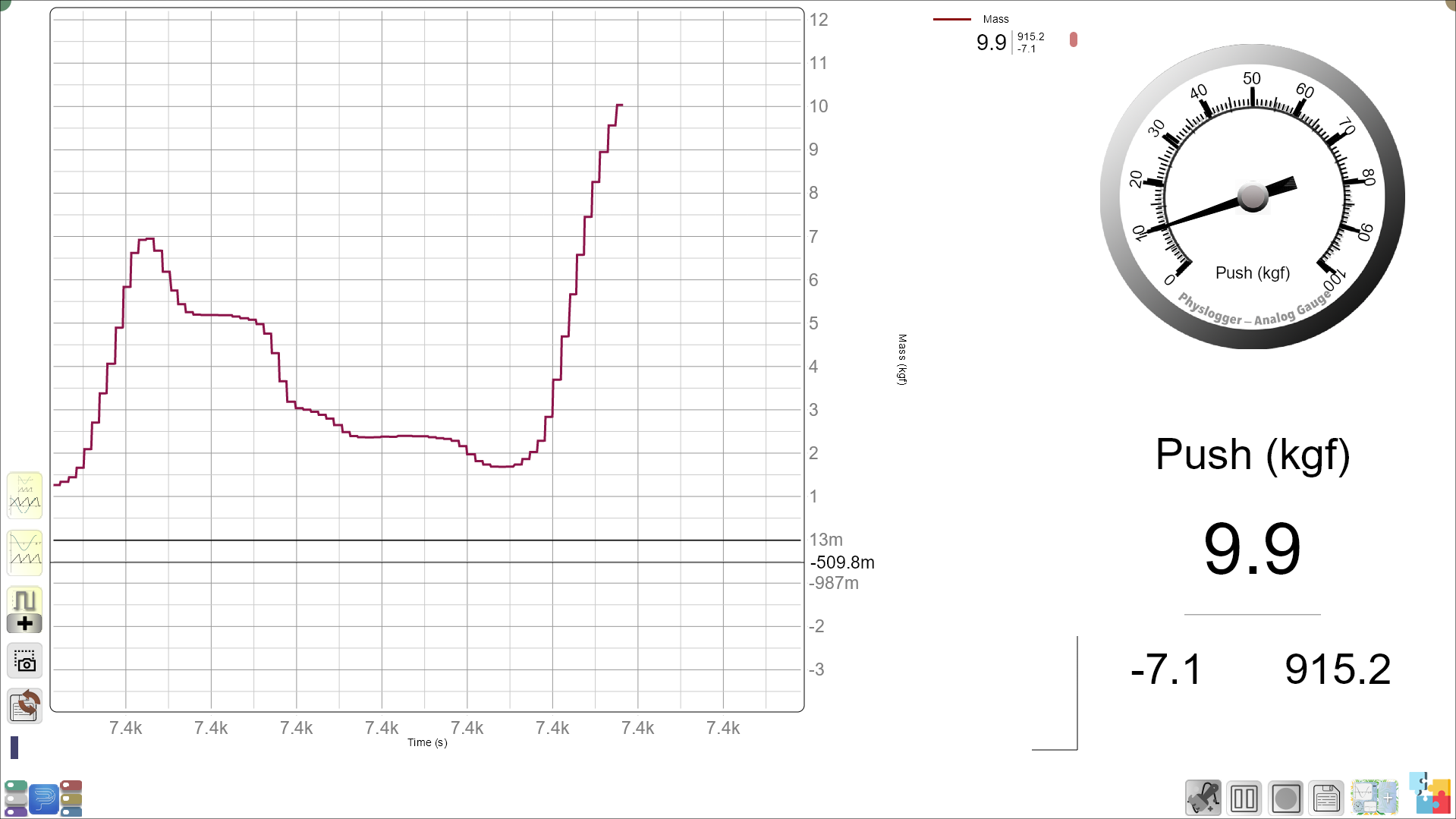
- Demonstrate: Pull the car back a little and let it go to hit the load cell. Show the live plot pulse.
Step 2: Predicting Energy Transfer
- Ask students:
- “If we pull the car back farther, what do you think will happen to the pulse? Will it be bigger or smaller?”
- Have students write their predictions on their worksheets.
Step 3: Experimenting with Winding
- Students work in small groups to:
- Pull the car back at different distances (e.g., 2 cm, 4 cm, 6 cm).
- Let it hit the load cell and observe the pulse on the live plot.
- Record results in a table:
| Winding Distance | Pulse Height on Plot | Observation |
|---|---|---|
| 2 cm | ||
| 4 cm | ||
| 6 cm |
Step 4: Discussing Results
- Ask:
- “What did you notice about the pulse when you pulled the car back farther?”
- Summarize:
- “The farther we pull the car back, the more energy we give it, and the harder it hits the load cell.”
3. Hands-On Activity: Paper Ball Drop (15 minutes)
Step 1: Setting Up the Experiment
Introduce the paper ball:
“When we lift this ball higher, we’re giving it more energy. When we drop it, that energy transfers to the load cell. But how do you think the height will affect the pulse?”
Step 2: Making Predictions
- Ask:
- “If I drop the ball from my knee, will the pulse be bigger or smaller than if I drop it from above my head?”
- Students write their predictions on their worksheets.
Step 3: Experimenting with Height
- Students take turns dropping the ball from different heights (e.g., 10 cm, 20 cm, 30 cm).
- For each trial, observe the pulse on the live plot and record results:
| Drop Height | Pulse Height on Plot | Observation |
|---|---|---|
| 10 cm | ||
| 20 cm | ||
| 30 cm |
Step 4: Discussing Results
- Ask:
- “What happened when we dropped the ball from higher? Why do you think that is?”
- Summarize:
- “The higher we lift the ball, the more energy we give it. That’s why it hits harder and makes a bigger pulse.”
4. Reflection and Wrap-Up (5-10 minutes)
Discussion Questions:
- “What did we learn about how energy is transferred when we pull the car back farther or lift the ball higher?”
- “Why do you think more energy made the pulse bigger?”
Key Takeaway:
“When we give something more energy, whether by winding the car or lifting the ball higher, it transfers that energy when it moves. That’s why we see bigger pulses!”
Worksheet Reflection:
- Definition of Energy Transfer:
- “Energy transfer is when energy moves from one object to another.”
- Reflection Question:
- “How did winding the car or lifting the ball higher change the energy transfer?”
Glossary:
- Energy Transfer: Moving energy from one object to another.
- Pulse: A quick, distinct signal on the screen indicating a momentary detection or change in the system.
- Load Cell: A tool that measures how hard something hits it.