Grade 3 – Session 8: “Solar Power Fun”
Architect: Aleeza Ayaz - Markhor3D
Session Length: 50-60 minutes
Session Overview:
In this session, students will explore how sunlight can be converted into electricity using a solar panel. Through hands-on experimentation, they will learn how adjusting the angle of the solar panel and using reflective surfaces like mirrors or aluminum foil can maximize electricity output. Students will work in teams, competing to see who can generate the highest power output by optimizing their setup. This session introduces real-world engineering concepts as students engage in problem-solving, teamwork, and critical thinking to maximize solar energy generation and understand the importance of solar power in everyday life.
Learning Objectives:
In this session, students will:
- Build an intuitive understanding of how solar energy converts into electrical energy.
- Learn to maximize electricity output by adjusting the angle of the solar panel and using reflective surfaces.
- Explore how real-world engineering techniques can be applied to optimize solar power generation.
- Develop teamwork and problem-solving skills as they compete to achieve the highest power output.
Teacher Resource:
Session File: ML38.plf (55.6 KB)
Equipment Required:
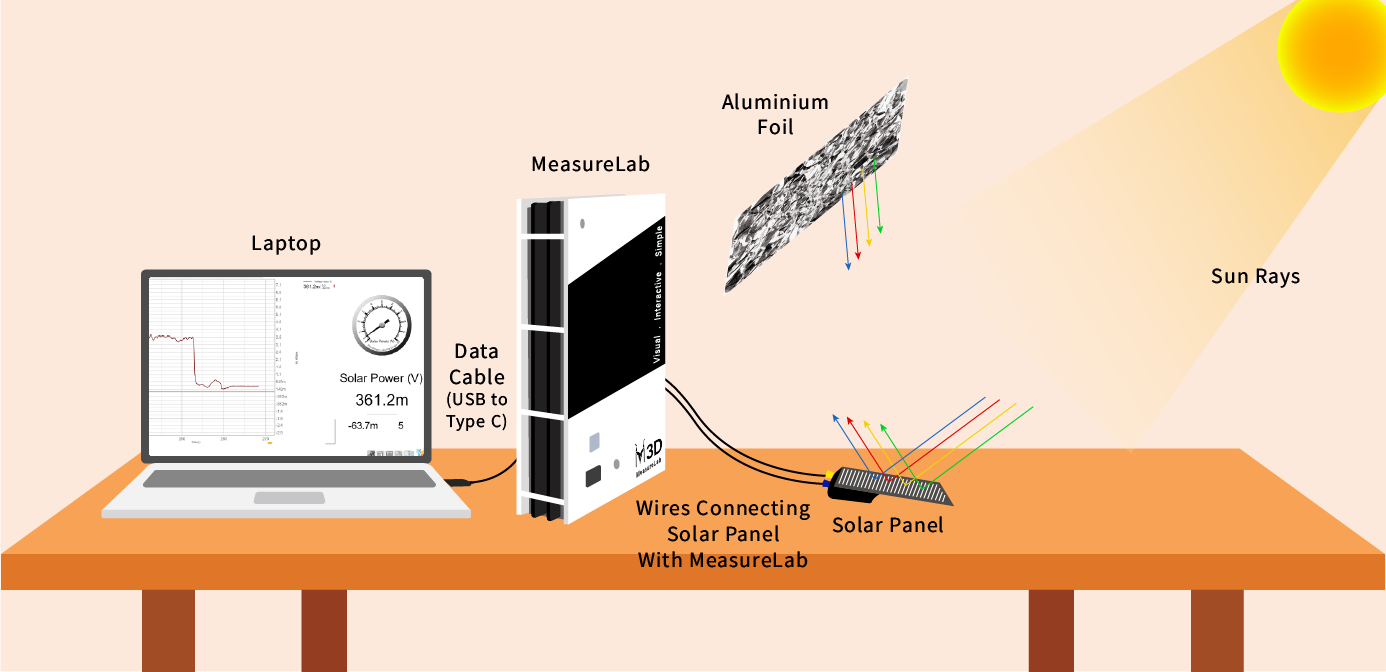
- MeasureLab (operating on battery) attached to a small solar panel.
- Aluminum foil or mirrors to reflect light onto the solar panel.
- Outdoors space with ample sunlight.
Preparation:
This step has to be done before the session on each workstation/apparatus by the teacher/session instructor:
- Make sure that each computer has Physlogger installed and can detect the Measrelab when connected to it using the provided cable.
- Each Measurelab should have access to a power outlet for sensors that require external power. For this session, we will use the solar panel attachment which requires external power source to be connceted.
- Use the provided Banana-to-Banana cables to connect the Solar Panel to the Measurelab using the following analog port:

The red wire goes in the yellow terminal and the black wire goes in the blue terminal.
- Once connected, launch the Physlogger application and load the session file provided in the resources section.
Your setup will look something like this:
Introduction: (10 minutes)
You may begin by asking:
“How many of you have seen solar panels before? Where do you think they’re used?”
Encourage students to share what they know about solar panels.
You may ask:
“Why do you think people use solar panels? What do they do?”
Guide students to answer that solar panels convert sunlight into electricity.
You may say:
“Today, we’re going to play around with solar panels to see how much electricity we can make from sunlight! We’ll use MeasureLab to measure the electricity, and you’ll compete to see which group can get the highest number on the screen. The higher the number, the more electricity you’re making!”
Hands-On Exploration: (30-35 minutes)
Step 1: Setting Up and Freedom to Explore
- Group Setup:
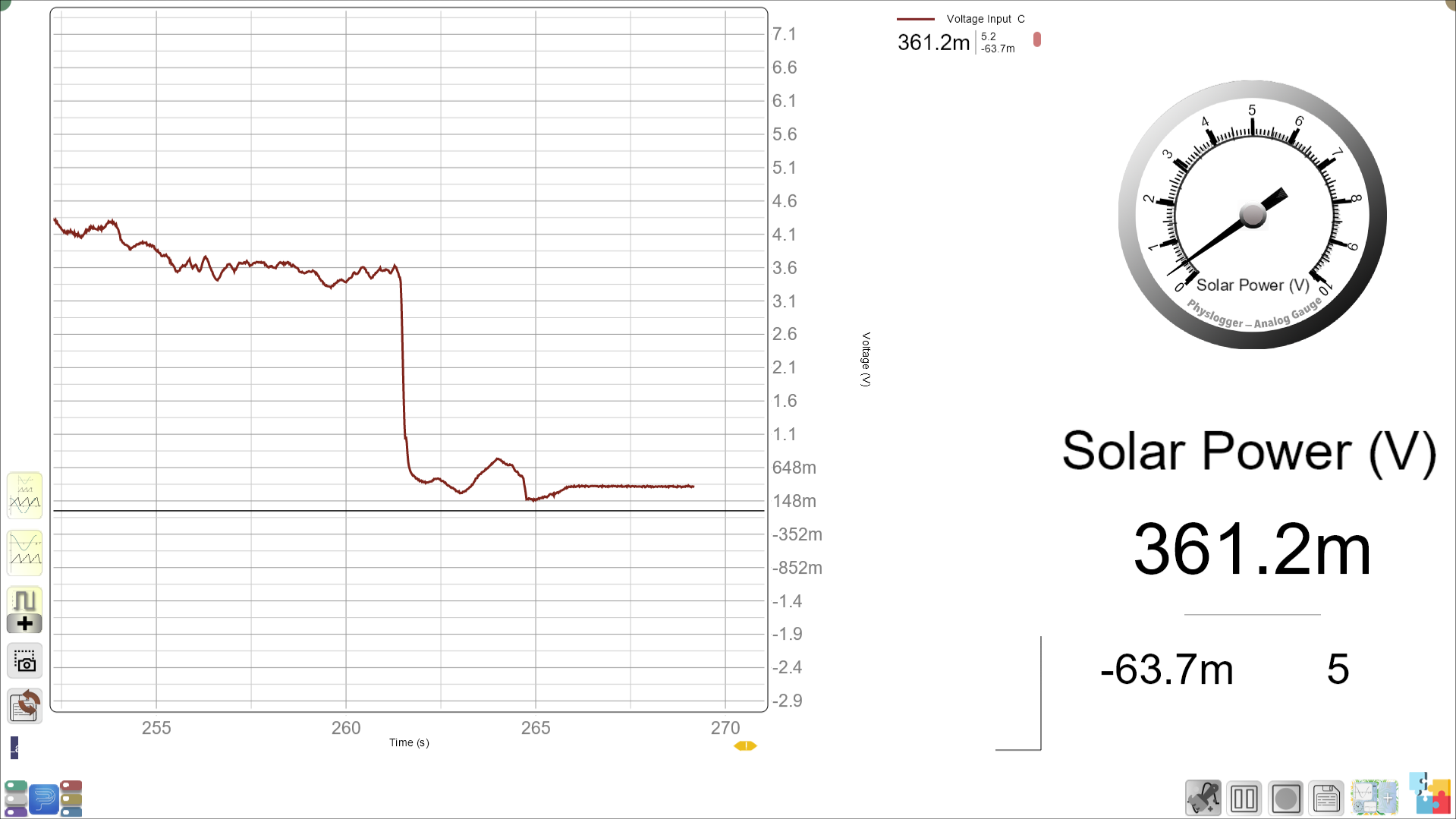
Each group gets a solar panel connected to MeasureLab. The power output will be displayed on the screen.
- Encouraging Freedom to Experiment:
You may say:
“Now, you can run around and adjust your solar panel! Tilt it, angle it, move it around, and see how you can make the number go higher. You’ll work together to get the most electricity from the sun!”
Allow students to freely experiment, trying different angles and positions.
Step 2: Using Reflective Surfaces
- Introducing Aluminum Foil/Mirrors:
Hand out aluminum foil or mirrors. You may ask:
“Who remembers what happens when light hits a shiny surface? Do you think we can use this to make more electricity?”
Encourage students to recall their previous lesson on reflection and connect the idea of reflecting more light onto the panel.
- Experimenting with Reflected Light:
You may guide the groups:
“Try using the foil to reflect sunlight onto your panel. Can you get the number even higher?”
Let students play with different angles of the foil or mirrors, reflecting light to increase the output.
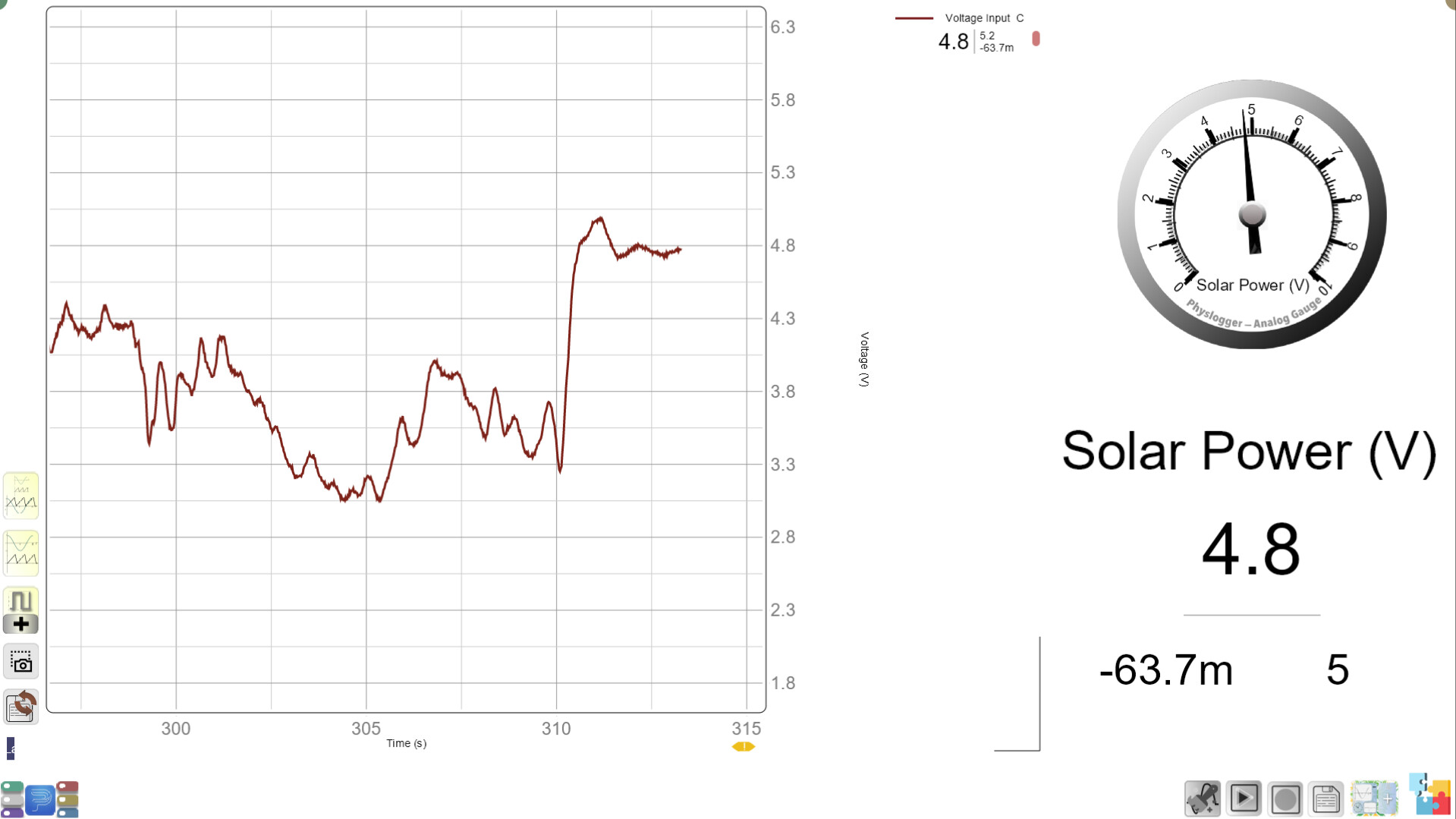
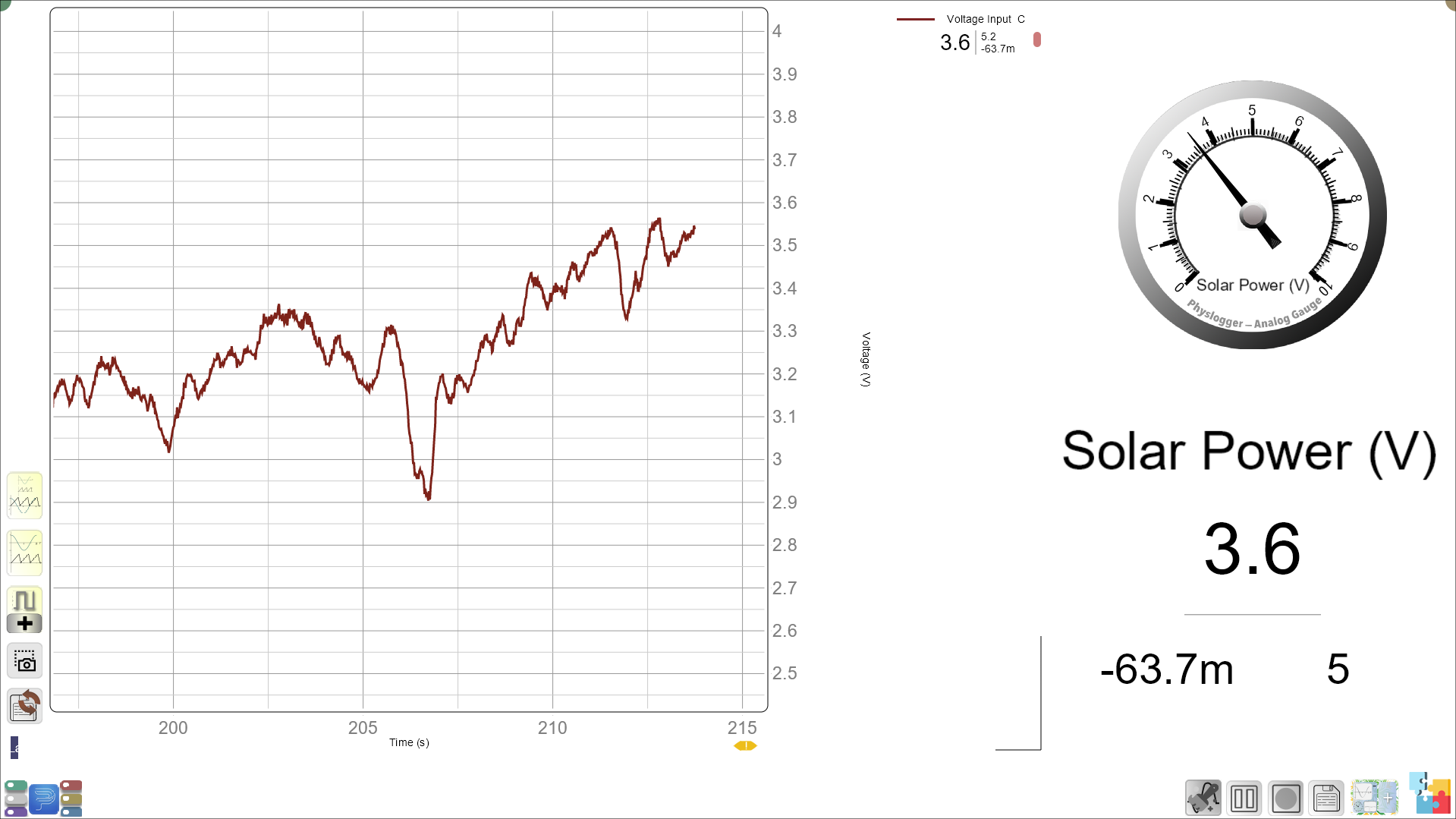
Solar Power in different orientations of the solar panel:
Step 3: Healthy Competition
-
Competition to Maximize Power:
Each group competes to see who can get the highest number on the MeasureLab screen.
You may encourage them by asking:
“Which group has the highest number so far? Who can beat that?” -
Guiding with Questions:
Walk around and ask questions to help students reflect:- “What happened when you moved the panel in this direction?”
- “Did the foil help you get more electricity?”
- “What’s the best angle you’ve found so far?”
Reflection: (10-15 minutes)
-
Discussion of Results:
After the exploration, gather students and ask them to share their experiences.
You may ask:- “Who got the highest number? How did you do it?”
- “What worked best for reflecting more light onto the panel?”
Guide students to explain their findings and share their strategies for maximizing power output.
-
Connecting to Real-World Use:
You may say:
“Solar panels on buildings usually don’t move like we did today. Do you think they always get the most sunlight throughout the day? Why not?”
Encourage students to think about how the position of the sun changes throughout the day and how solar panels might not always be in the best position to capture sunlight.
Summary:(5-10 minutes)
You may conclude with:
“Today, we learned that solar panels turn sunlight into electricity. By moving the panel and using shiny surfaces like foil, we were able to make more electricity! Engineers think about these things when designing solar panels for homes, cars, and even space missions.”
Reflection Questions:
- “What happens if the sun is covered by clouds? Will the panel still make as much electricity?”
- “How could we use what we learned today to make better solar panels?”
Glossary:
- Solar Panel: A device that converts sunlight into electricity.
- Electricity (Power): The energy generated by the solar panel.
- Reflective Surface: A surface that bounces light back to the solar panel.
- Angle: The position of the solar panel in relation to the light source.