Grade 4 – Session 9: “Water Cycle—Observing Evaporation”
Session Architect: Aleeza Ayaz - Markhor3D
Session Length: 50-60 minutes
Session Overview:
In this session, students explore the process of evaporation and its role in the water cycle by observing water loss in wet cloths. Using MeasureLab’s load cell, they will monitor how heat affects the rate of evaporation by comparing two cloths—one dried naturally and the other with the help of a blow dryer. Through hands-on experimentation, they make predictions, measure weight changes, and discuss how heat influences water’s transition from liquid to vapor. Students will connect their observations to the natural water cycle, gaining insight into concepts such as heat energy, water vapor, and environmental processes that impact everyday life.
Equipment Required:
- MeasureLab with built-in load cell.
- Two identical pieces of cloth (same material, size, and weight).
- Water.
- Blow dryer (kept at a distance to prevent added air weight from affecting the load cell readings).
- Worksheet to record observations.
- Pens, pencils, markers, etc.
Learning Objectives:
In this session, students will:
- Learn how heat affects evaporation by observing the rate of water loss from wet cloths.
- Understand what evaporation is and how it relates to the water cycle.
- Identify potential errors in an experiment and how to account for them.
- Relate evaporation to the concept of energetic particles leaving a liquid.
Teacher Resource:
Session File: ML49.plf (57.8 KB)
Teaching Aids:
- Projector for displaying live plots (optional).
Structure and Lesson Plan:
Preparation:
This step has to be done before the session on each workstation/apparatus by the teacher/session instructor:
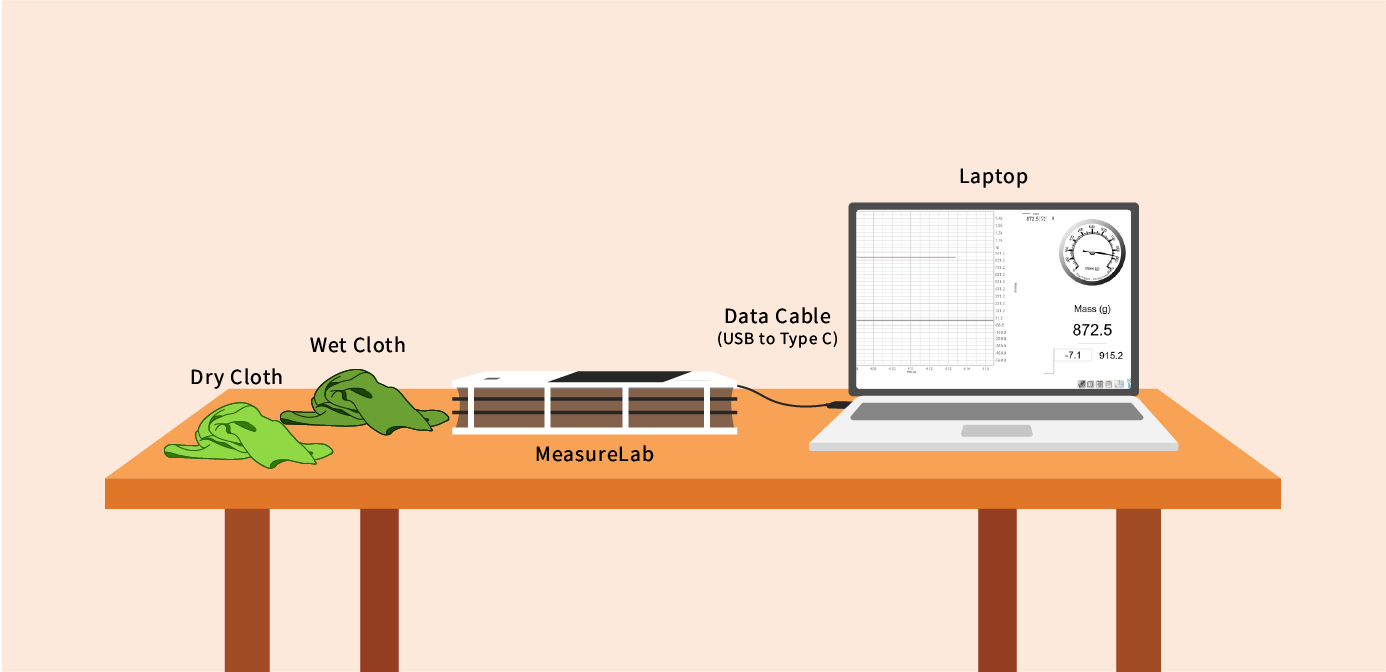
- Make sure that each computer has Physlogger installed and can detect the Measrelab when connected to it using the provided cable.
- Each Measurelab should have access to a power outlet for sensors that require external power. For this session, we will use the loadcell which does not need external power.
- Connect the Measurelab to your computer and open the provided session file.
- Your setup will look like this:
Introduction: (15 minutes)
You may begin by asking:
“How many of you have noticed what happens to wet clothes when they’re left outside to dry? Why do they dry up?”
Allow students to answer and share their experiences.
Some may mention that the sun helps dry them, or that the clothes just seem to get dry over time.
You may continue by saying:
“That’s because of something called evaporation. It’s when water particles in the wet clothes slowly escape into the air. And today, we’re going to see how heat can make that happen faster.”
Ask them:
“When we dry our clothes, where does the water go?”
“When you put clothes in the sun or use a dryer, why do you think they dry faster?”
Introduce the experiment:
“We’ll be testing this today with two wet pieces of cloth. One will dry naturally, while the other will have a blow dryer helping it. But we need to make sure we don’t let the air from the dryer affect our results by adding extra weight.”
Hands-On Exploration: (25-30 minutes)
Step 1: Setting Up the Experiment:
- Take two identical pieces of cloth and weigh them on the load cell before they are wet.
- Wet both pieces of cloth evenly and wring out the excess water.
- Place the wet cloths back on the load cell.
Step 2: Evaporation in Action:
- One cloth will be left as it is, and the other will have a blow dryer applied at a safe distance so that the air from the dryer doesn’t affect the load cell’s readings.
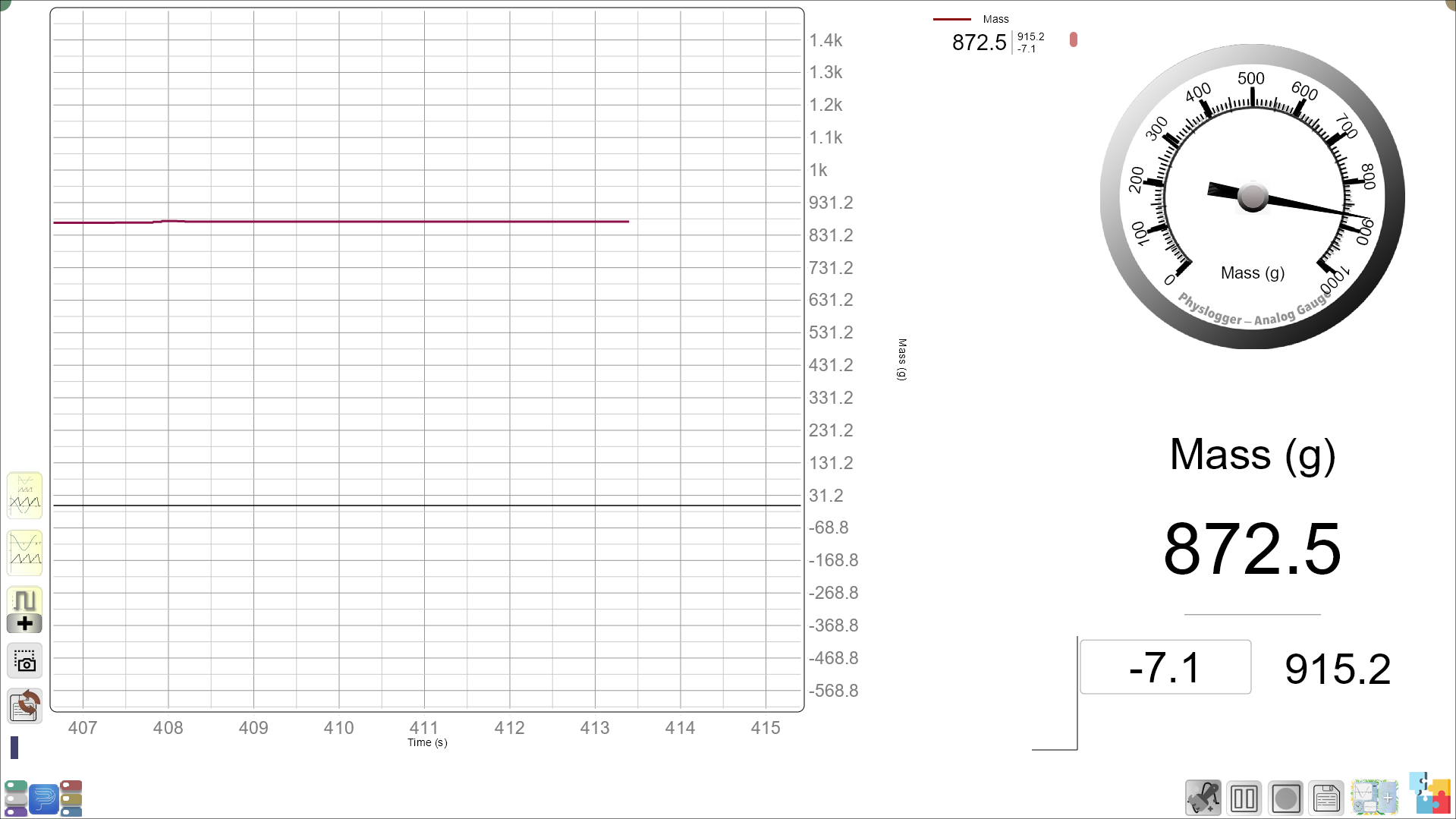
- Guide students to observe the live plot and the weight loss over time.
You may ask:
“What do you think will happen to the weight of the cloth over time? Why?”
“Why do you think we don’t see steam coming off the cloth?”
Encourage students to notice the gradual decrease in weight as the water evaporates.
Identifying Errors:
Guide the students to think about potential errors:
“We are using a blow dryer. What could happen if the air blows directly on the load cell? How might that change our results?”
Ask them to identify ways to minimize these errors, such as keeping the blow dryer at a distance to only dry the cloth, not affect the readings.
Real-Life Connection to the Water Cycle:
You may say:
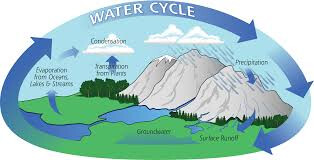
“Now let’s think about what happens to water in nature. It doesn’t just disappear when it evaporates—it’s part of something called the water cycle.”
Ask the students:
“Has anyone heard of the water cycle before? What do you think happens to water when it evaporates into the air?”
Build on their responses:
“When water evaporates from lakes, rivers, or even wet clothes, it turns into vapor and rises into the sky. But that water doesn’t just stay there. It cools down, forms clouds, and eventually falls back to the ground as rain. This is how the water cycle works!”
You may explain:
“Evaporation is just one part of the water cycle. It’s the part where water changes from liquid to vapor. When it cools down high in the sky, the water vapor turns back into droplets, which fall as rain, snow, or hail. This is called precipitation. And when the rain falls, the whole cycle starts again.”
Use a relatable example:
“Imagine you’re standing by the ocean on a sunny day. The water on the surface is evaporating into the air, rising up into the clouds. Later, those clouds might bring rain to another part of the world. That’s how all the water on Earth keeps moving around in a cycle, helping to keep the planet cool, grow plants, and give us the rain we need.”
Connecting Back to the Experiment:
You may guide them to make connections:
“The water in the cloth is doing the same thing! The heat from the blow dryer helps the water evaporate faster, just like the sun heats up water in nature. The more heat, the faster the water disappears.”
Ask them:
“Why do you think the water in the cloth with the blow dryer evaporates faster than the one without it? How is that similar to what happens in the water cycle?”
Worksheet Layout:
- Predictions:
What will happen to the weight of each cloth over time?
- Cloth with blow dryer: _______
- Cloth left to air-dry: _______
- Observations:
- Starting weight of both cloths: _______
- Weight of blow dryer cloth after [time]: _______
- Weight of air-dry cloth after [time]: _______
- Reflection:
Why did the cloth with the blow dryer dry faster?
What is evaporation?
How did heat affect evaporation?
How does evaporation fit into the water cycle?
Summary and Reflection: (10-15 minutes)
You may summarize the key points:
“Today, we saw how heat can speed up evaporation. The blow dryer added heat, making the water in the cloth leave faster. This is similar to how the sun dries things in nature.”
Ask them to reflect:
“What did you learn today about how heat affects water? Can you think of other examples where heat helps dry things? How does this relate to the water cycle we talked about?”
Next Session
Previous Session
Glossary:
- Evaporation: When water changes from liquid to gas and leaves the surface.
- Heat: Energy that makes particles move faster, causing changes like drying.
- Load Cell: A sensor that measures weight.
- Water Cycle: The continuous movement of water through evaporation, condensation, precipitation, and collection.
- Condensation: The process of water vapor turning back into liquid, forming clouds.
- Precipitation: Water falling from the sky as rain, snow, or hail.