Grade 5 - Session 7: “Hearts, Heights, and How We Move”
Session Architect: Aleeza Ayaz - Markhor3D
Session Length: 50-60 minutes
Session Overview
This session is a dynamic exploration of how height, movement, and heart rate are connected. Students will first learn about their heartbeats and measure their resting heart rate. Then, they’ll investigate the concept of height, observing how height changes in their environment. Through a fun physical activity involving climbing stairs and measuring height, students will discover how their heart rate changes with movement. The session concludes with a guided discussion to connect these observations, fostering curiosity and critical thinking about how our bodies respond to physical exertion and height changes.
Equipment Required
- MeasureLab
- Stopwatch or timer (optional for manual pulse measurement).
- Worksheet for recording data and observations.
- Pens, pencils, markers, etc.
Learning Objectives
By the end of this session, students will:
- Understand what heart rate is and how it changes during physical activity.
- Use a height sensor to measure changes in height at different locations in their school.
- Discover the connection between physical activity, height, and heart rate.
- Reflect on how these changes relate to everyday life experiences, like climbing stairs, hiking, or exercising.
Teacher Resource:
Session File: ML57.plf (62.9 KB)
Preparation:
This step has to be done before the session on each workstation/apparatus by the teacher/session instructor:
-
Make sure that each computer has Physlogger installed and can detect the Measrelab when connected to it using the provided cable.
-
Each Measurelab should have access to a power outlet for sensors that require external power. For this session, we are going to use two sensors:
a. Heart Rate Sensor
b. Height Sensor -
Both sensors are built into Measurelab. The height sensor can work without external power so that the students can measure height at different points in the school. The pulse sensor needs an external power supply.
-
Launch the Physlogger application and load the session file provided in the resources section.
1. Start the Conversation: The Heart and Movement (10 minutes)
- Engage with a Question:
“Who has ever run up a flight of stairs or raced with a friend? What happened to your breathing or your heartbeat afterward?”
Let students share their experiences. Some might mention feeling out of breath or noticing their heart pounding. Build on this:
“That’s because when you move your body a lot, your heart works harder to pump blood and oxygen to your muscles. Today, we’re going to measure how our heart rate changes when we move.”
- Explaining Heart Rate:
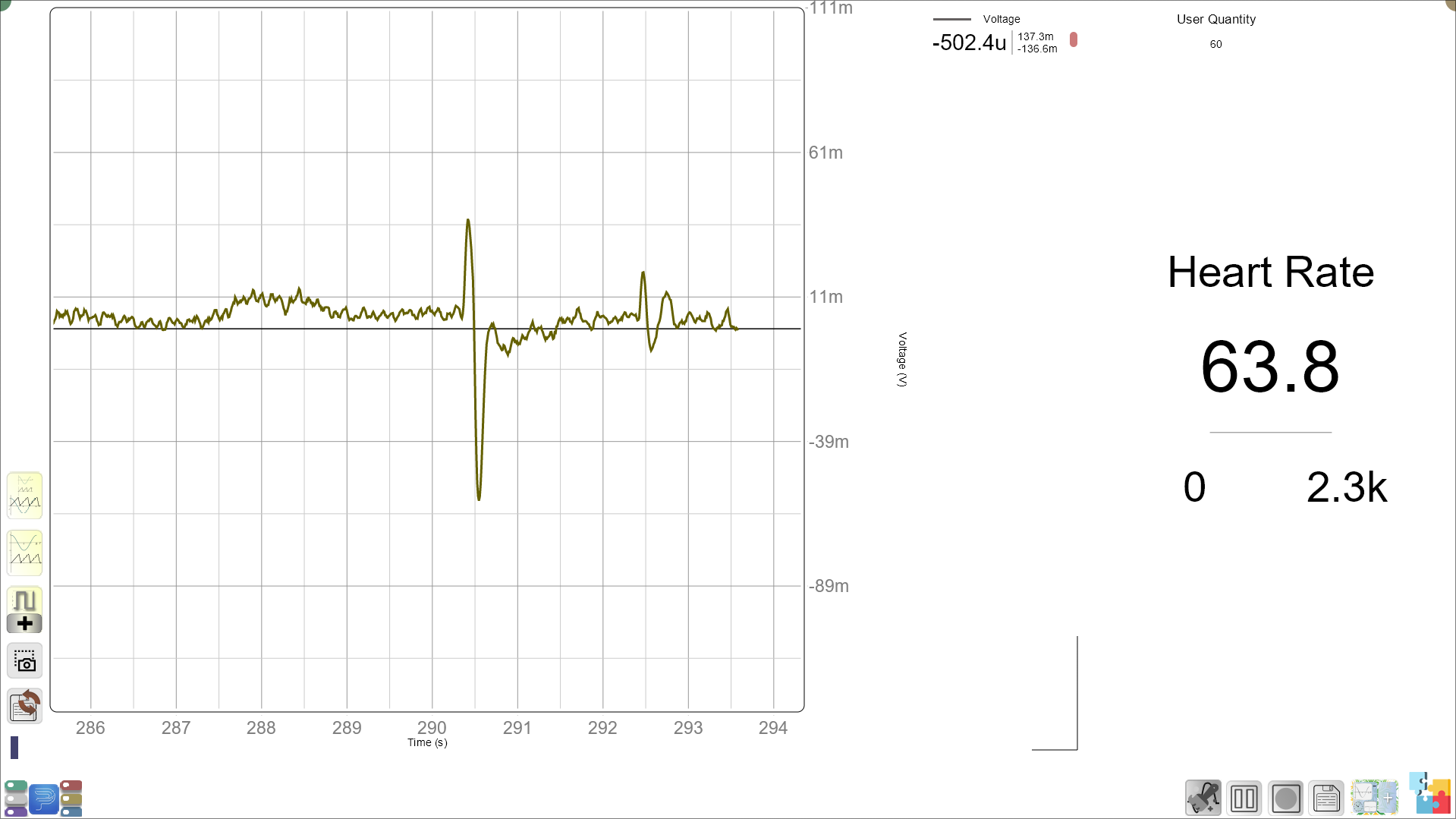
“Your heart is like a pump. It beats to push blood all around your body, carrying oxygen to where it’s needed. When we’re resting, our heart beats slower because it doesn’t need to work as hard. But when we move, it has to beat faster to keep up with the extra work.”
Show students how to measure their heartbeat using the MeasureLab heart rate sensor
-
Measure Resting Heart Rate:
- Guide students to measure their resting heart rate.
- Have them record their resting heart rate on their worksheet:
Worksheet Section:
Name Resting Heart Rate (beats per minute) Example Student __________ “This is your resting heart rate. It shows how your heart works when you’re not moving much. Keep this number in mind—we’ll check it again later!”
2. Transition to Height: Observing Changes in Our Environment (10 minutes)
- Introduce the Concept of Height:
“Now, let’s change our heartbeat. How can we do that?”
Encourage them to answer.
"Yes! We can move around to change our heartbeat. We can go to the upper floor using the stars. But what happens when you go higher up, like climbing a hill, stairs, or a tall building?
Build on their responses:
“Yes! The height changes. It changes a lot around us. Today, we’re going to measure height in different parts of the school and see what happens to our bodies when we move higher up!”
- Connecting Height to Everyday Life:
“Think about climbing a mountain or flying in an airplane. The higher you go, the harder your body has to work. Let’s explore why!”
3. Physical Activity: Measuring Height and Heart Rate (20 minutes)
- Set the Stage for the Activity:
“We’ll now go on a journey around the school to measure height at different locations—like the ground floor, stairs, and upper levels. As we move, pay attention to how your body feels. Is your heart beating faster? Are you breathing harder?”
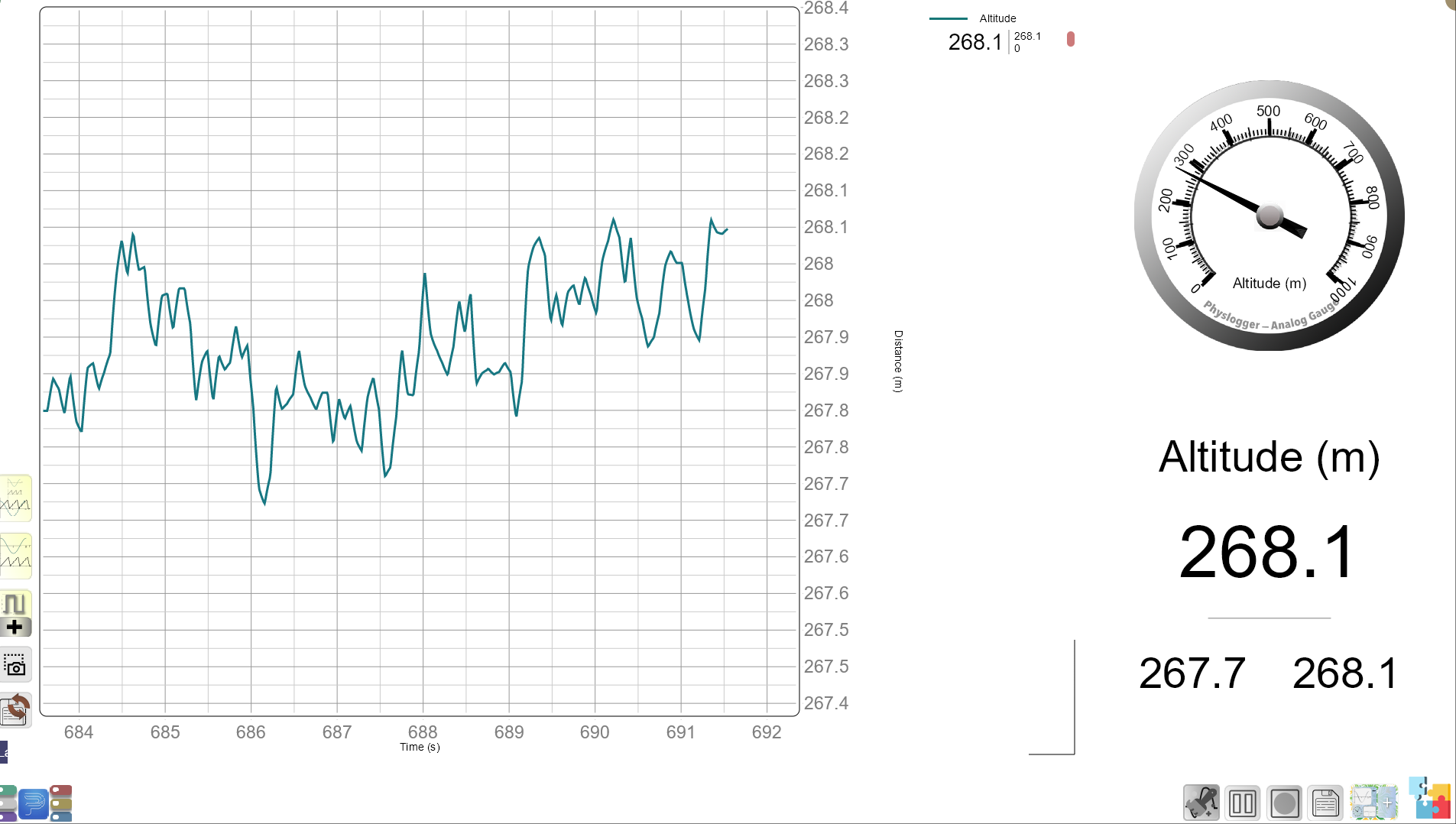
- Using the Height Sensor:
Show students how the height value changes as you move.
Break them into groups and assign locations to measure:
- Ground floor.
- Stairs.
- Top floor.
- Outdoor area (optional).
-
Record Height Data:
Each group records their measurements on the worksheet:Worksheet Section:
Location Height Reading (m) Ground level __________ Staircase __________ Top floor __________ Outdoor area __________ -
Encourage Observation:
While students move to different heights, prompt them to notice how they feel:“Does moving upward make you feel tired? Can you feel your heart beating faster? Let’s measure our heart rate again when we return!”
4. Back to Class: Measure Heart Rate Again (5 minutes)
-
Measure Heart Rate After Activity:
Once back in class, students measure their heart rate again. They record this on their worksheet:Worksheet Section:
Name Heart Rate After Activity (beats per minute) Example Student __________ -
Compare the Numbers:
Guide students to compare their resting and post-activity heart rates:
“What do you notice about your heart rate now compared to when we started? Why do you think it’s higher?”
5. Guided Discussion and Wrap-Up (10 minutes)
- Encourage Critical Thinking:
Ask students:
“Why do you think your heart was beating faster after moving to higher places?”
Lead them toward the answer:
- Moving upward requires more effort because gravity is pulling us down.
- Our bodies need more oxygen to keep working, so the heart beats faster to deliver it.
- Connect to Real-Life Scenarios:
“This is why athletes, hikers, or climbers often feel tired when they go uphill. It’s also why your heart rate might increase when you exercise or climb stairs.”
Relate this to everyday life:
- “Next time you’re climbing stairs or playing a sport, think about how hard your heart is working to keep you going!”
- Summarize Key Takeaways:
“Today, we learned about heart rate and height. We saw how moving to different places changes height and how our heart beats faster when we’re active. Isn’t it amazing how our bodies work?”
Worksheet Overview
-
Heart Rate Measurement:
- Resting heart rate.
- Heart rate after activity.
-
Height Measurement:
- Record height at different locations.
-
Reflection Questions:
- Why did your heart rate increase after the activity?
- How does moving to higher places affect your body?
- Can you think of a time when you felt your heart beating fast in everyday life?
Glossary
- Heart Rate: The number of times your heart beats in one minute.
- Height Sensor: A tool that measures how high something is from the ground.
- Physical Activity: Movements like running, climbing, or walking that make your body work harder.
- Gravity: The force that pulls objects toward the Earth, making it harder to move upward.